How to apply for Safaricom jobs: a step-by-step guide
Learn how to navigate Safaricom's multi-stage recruitment process, from setting up your Oracle Cloud profile to tailoring your CV and cover letter to stand out. Understand what Safaricom looks for in candidates.
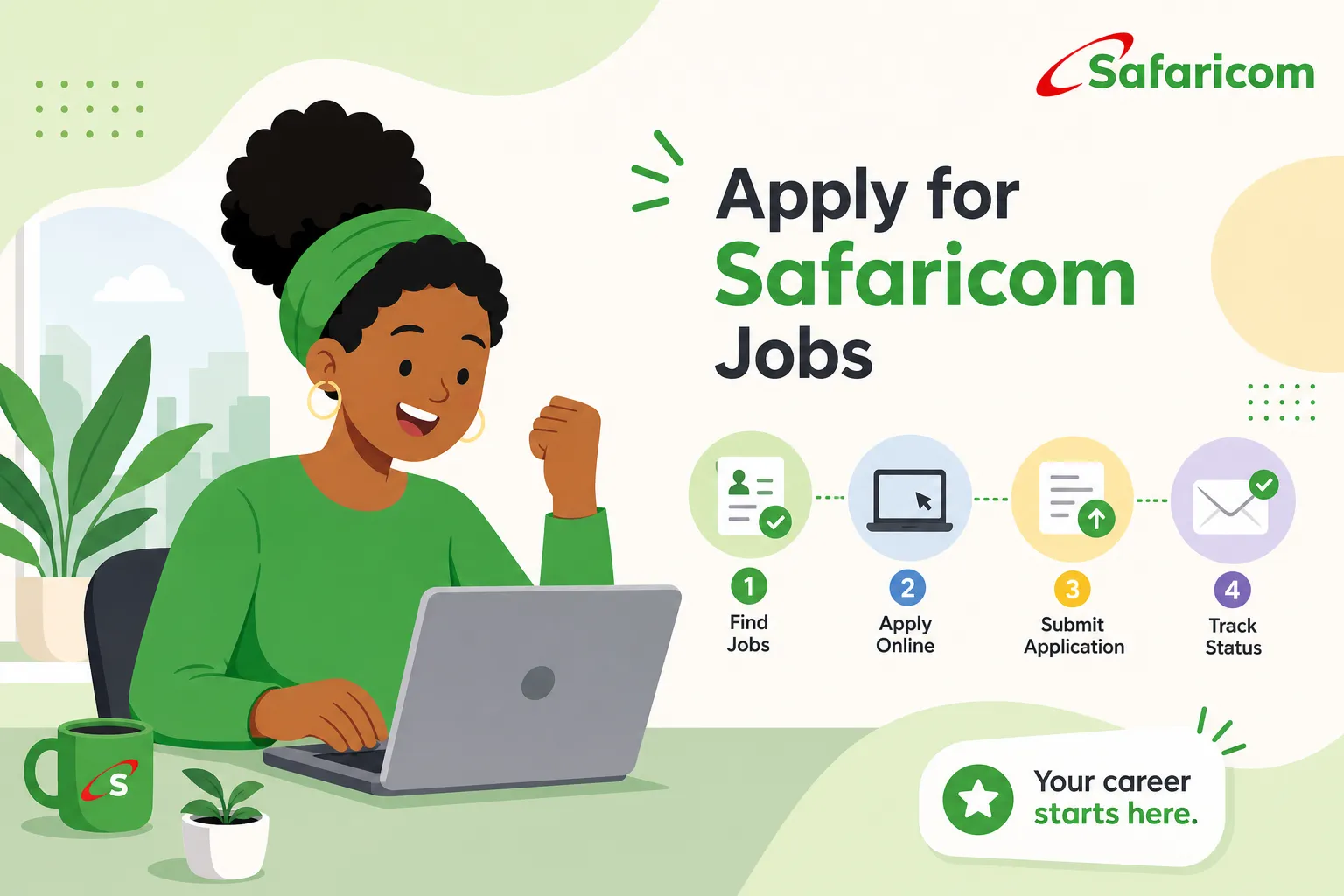

Safaricom is among the most applied-to employers in Kenya, consistently drawing large volumes of applications for each vacancy and running a structured, multi-stage recruitment process through an Oracle Cloud careers portal that catches many candidates off guard before they ever submit. Getting through to interview requires more than a decent CV: it requires understanding exactly how the process works and preparing for each stage before each one arrives.
This guide walks through every step of how to apply for Safaricom jobs, from setting up your candidate profile to what happens after you click submit. If you are targeting Safaricom specifically, tools like Tellus allow you to monitor Safaricom's careers portal automatically, flagging new roles the moment they go live so you are never the last to know about a vacancy.
What Safaricom looks for before you even apply
Safaricom uses a competency-based hiring framework, which means they are evaluating not just your qualifications on paper but how you have demonstrated specific behaviours in real situations. Understanding this changes the way you should read every job description and the way you should structure every application document you submit.
The core competencies Safaricom prioritises
Across Safaricom job descriptions, four values appear consistently: customer obsession, innovation, trust, and collaboration. These are not decorative mission-statement words. In a competency-based process, interviewers ask for concrete examples using the STAR method, which stands for Situation, Task, Action, and Result. Candidates who prepare five or six polished STAR examples tied directly to these values are better placed to answer competency-based questions than those who rely on generalities. Preparing these stories before you even submit your application changes your entire mindset about the documents you produce.
Qualifications and experience requirements
For most corporate roles at Safaricom, a relevant undergraduate degree is the baseline requirement. Proficiency in English is expected, and roles typically specify a minimum number of years of experience in a defined discipline. For internship applications, candidates must be in their final or second-last year of study at an accredited institution. Safaricom states its requirements clearly on the portal, so apply only when your profile genuinely matches what is listed. Applications that misrepresent experience level are unlikely to pass automated screening, and they waste the window you could use to apply for a role you are actually suited to.
How to apply for Safaricom jobs: setting up your portal profile
All Safaricom applications in Kenya go through an Oracle Cloud Candidate Experience portal, accessible at egjd.fa.us6.oraclecloud.com/hcmUI/CandidateExperience/en/sites/CX. Many applicants waste time attempting to apply through BrighterMonday, Fuzu, or LinkedIn, not realising those platforms typically link back to this same portal rather than hosting the application themselves. Getting your profile correctly set up on Oracle Cloud is the foundation everything else rests on.
How to create your candidate account
The process is straightforward once you know where to go. Follow these steps in order:
- Visit the official Safaricom careers portal on Oracle Cloud
- Click "Register" and enter your full name, email address, and phone number
- Verify your email using the confirmation link sent to your inbox
- Log in and complete your candidate profile with your full work history, education, and key skills
The profile must be fully completed before you apply for any role. Submitting an application with an incomplete profile is one of the most common reasons candidates are filtered out before a human recruiter ever sees their CV. Do not rush this step.
Documents to prepare before you click apply
For job applications, you will need an updated CV in PDF format, proof of identity, and references from previous employers where relevant. Internship applications require additional documents at a later stage of the process: a college letter confirming your student status, a copy of your National ID, your KRA PIN, NSSF and NHIF details, a Good Conduct Certificate, and a CRB Certificate. Gather all of these in advance. Safaricom roles can close quickly, and scrambling to locate a Good Conduct Certificate when a deadline is two days away is an entirely avoidable problem.
Writing a Safaricom application that gets noticed
With large volumes of applications per vacancy, a generic CV and a recycled cover letter will not survive the first screening stage. The applicants who advance are those who have read the job description carefully and produced documents that speak directly to it.
Tailoring your CV to the job description
A targeted CV for a Safaricom role mirrors the language of the job description, leads with achievements that match the stated responsibilities, and quantifies impact wherever possible. Numbers communicate results clearly: percentages, revenue figures, team sizes, and timelines all work. Each bullet point in your experience section should follow a tight "action plus result" structure rather than listing duties. Generic job descriptions copied from previous positions do not demonstrate competence in the specific areas Safaricom is assessing.
Writing a cover letter in Safaricom's language
A cover letter for Safaricom should not restate your CV. It should answer one question: why you, for this specific role, at this specific company. Reference Safaricom's stated values and demonstrate genuine familiarity with the business unit you are applying to, whether that is commercial, technology, M-PESA Africa, or another division. Include one or two competency-based examples that do not appear verbatim in your CV. This shows that you understand how Safaricom evaluates candidates and that you have done the preparation to match that framework.
How Safaricom's recruitment process works
Once you submit, the process moves through several clearly defined stages. Knowing what is coming allows you to prepare before an assessment link arrives in your inbox rather than scrambling after it does.
Initial screening and the Codility technical assessment
Safaricom uses automated screening to verify that applications are complete and relevant. Candidates who pass are invited to a Codility online assessment, a platform that evaluates technical, psychological, and competency skills. For technology roles, this includes coding challenges covering Python, SQL, algorithms, and data structures. The assessment typically runs for 2 hours and 15 minutes across four tasks, with code that does not compile scoring zero. According to publicly reported figures, Safaricom has used Codility to process over 8,000 applications in under three weeks, which illustrates the volume you are competing against. Notice periods vary considerably: some candidates report receiving their Codility link with as little as 24 hours to act, while others have been given over a week. Being mentally prepared before you even apply for Safaricom jobs is the sensible approach.
Video and face-to-face interview stages
Candidates who pass the Codility stage move to a HireVue video interview, a fully remote, asynchronous assessment where you record responses to five structured questions on camera. There is no live interviewer on the other side. You typically have 30 seconds to read each question and a short window to respond, and the system auto-submits when time expires. After HireVue, shortlisted candidates proceed to face-to-face or panel interviews with hiring managers and team members. These interviews are heavily competency-based, and the STAR examples you prepared at the start of this process are what carry you through. The average time from application to offer at Safaricom is approximately 33 days, though competitive roles can take longer.
Tracking your application status
You can log into your Oracle Cloud account at any time to check where your application stands. The portal shows whether you are still under review or progressing to the next stage. Safaricom does not consistently send rejection emails to all unsuccessful candidates, so do not rely solely on your inbox. Check the portal regularly, keep an eye on your spam folder, and if you have heard nothing near a stated deadline, it is worth contacting the recruitment team directly to confirm your application was received correctly.
Smart moves that put you ahead of other applicants
The candidates who land Safaricom roles are not always the most credentialled on paper. They are the ones who apply early, tailor every document, and prepare for assessments before they are invited. These habits are practical and entirely within your control.
Why timing matters more than most applicants realise
Safaricom vacancies attract large volumes of applications within the first 48 hours of going live. Applying early signals genuine interest and ensures your profile is reviewed before hiring managers become overwhelmed with volume. The challenge is that most job seekers only discover a new Safaricom posting after it has been live for several days, often surfacing through a third-party job board such as LinkedIn jobs rather than the official portal. By that point, the early-mover advantage is already lost.
How Tellus monitors Safaricom's careers page automatically
Tellus solves this specific problem directly. Using its Custom Company Portal Watchlist feature, Tellus monitors Safaricom's official Oracle Cloud careers portal directly, not through an aggregator. The moment a new role appears that matches your profile, Tellus flags it. Its Smart Apply Mode then generates a tailored cover letter, an updated CV objective statement, and a ready-to-send Gmail draft, so you can submit a polished, targeted application within minutes of the vacancy going live. For anyone specifically targeting Safaricom, this removes the daily manual checking and eliminates the lag that costs candidates the early-mover advantage. Tellus is free to use and integrates with both Gmail and Google Drive to keep your entire application pipeline organised. Learn more about How It Works.
If you are hunting internships specifically, Safaricom's internship programme is regularly announced on their social channels and on partner sites, so a watchlist can be particularly useful for final-year students.
Common mistakes that get applications rejected early
Several errors consistently end applications before a recruiter sees them. The most common include:
- Uploading a CV that is not in PDF format
- Submitting with an incomplete candidate profile
- Applying for roles that do not genuinely match your experience level
- Responding to fraudulent job adverts
On that last point: Safaricom does not charge application fees, and it does not recruit through WhatsApp groups. If any contact asks for money or requests personal banking details during what appears to be the application process, it is a scam. Report it and walk away.
Putting it all together
The Safaricom application process is structured, competitive, and transparent. That structure actually works in a well-prepared candidate's favour because every stage can be anticipated and prepared for in advance. Understand what the competency framework demands, build your Oracle Cloud profile before any specific role catches your eye, tailor your CV and cover letter to the job description, and prepare your STAR examples before the HireVue link arrives.
Candidates who struggle tend to treat the process reactively, updating their CV the night before a deadline and hoping a generic cover letter will carry them through. Those who succeed treat each application as a system: preparation comes before submission, and follow-up before silence does the work for you. Read more about The Problem & Solution to understand how automation changes job hunting outcomes.
If you are serious about how to apply for Safaricom jobs and want to move faster than the competition, set up a Tellus watchlist for Safaricom's careers portal today. When the right role opens, you will be ready to submit a complete, tailored application in minutes rather than days, and that timing difference matters more than most applicants ever realise. If you have questions before you start, check our Frequently Asked Questions.
Software engineer writing about the craft of building products on the web.